What to Do After Your Website Launches: A 90-Day Plan
Launch is not the finish line. Week 1 makes you findable, weeks 2 to 4 fix what the data shows, months 2 and 3 start the real work, all based on official Google and Bing documentation, with a printable checklist and an ownership table
The first 90 days after launch run in three stages: in week 1, set up Search Console, Bing Webmaster Tools and GA4; in weeks 2 to 4, fix what the indexing, 404 and speed reports show; in months 2 and 3, build a content cadence. Google says results take weeks to months, and no one can guarantee rankings.
Contents ▾
Launch day is usually the loudest day of a website project. The agency sends the live URL, someone posts it in the company chat, sales updates their email signatures, and everyone exhales. Then the site sits there.
Three months later the conversation tends to go like this: "Why can't I find our new site on Google?" "How many quote requests came through the form?" "Who is actually looking at Search Console?" The answers are often: you can find the company name but not the products; nobody knows about the form; and the Search Console login belongs to a developer's personal Gmail account.
Nobody was lazy. Most people carry a construction mental model of a website: the building is handed over and the job is done. A website behaves more like a storefront, where opening day is only the first day of trading. Search engines need time to discover the site, evaluate it and add it to their index. Data needs time to accumulate. Content needs someone to keep adding to it. The first 90 days after launch are when a site goes from existing to being found, and they are the stretch most companies skip.
A note on scope. What to verify on launch day itself (who owns the domain, whether the form actually delivers mail, whether the sitemap is submitted) is covered as a 28-item checklist in our website RFP spec and launch acceptance checklist, and this article does not repeat it. This picks up after acceptance: what to do in week 1, weeks 2 to 4, and months 2 to 3, which tools to use, and what "done" looks like at each step. Every tool setting and every statement about timing is taken from Google, Bing or other official documentation. Where the official sources make no promise, neither do we.
If your site is still being planned, start with building an export website from zero to launch. If you are still deciding whether a marketplace storefront is enough, read Alibaba store vs. your own website first.
The 90-day plan at a glance: three stages, in order
Short answer: the first 90 days break into three stages. In week 1 you make the site findable and start collecting data, in weeks 2 to 4 you read the reports and fix what blocks indexing, and in months 2 and 3 you start actually operating the site with content. The order matters because each stage depends on data gathered in the one before it.
Why this order? Nearly every report has a delay built in. Google says it can take a week or so for Google to start crawling and indexing a new page or site, and Search Console data only becomes available in Search Console and Analytics 48 hours after it is collected. In week 1, then, all you can do is connect the pipes. From week 2 onward there is something to read. And a content strategy only has a foundation once you can see which searches are surfacing your pages.
Summary table: the three stages
| Stage | Goal | Main tasks | Main tools | What done looks like |
|---|---|---|---|---|
| Week 1 | Make the site findable and start collecting data | Verify properties, submit the sitemap, import into Bing, set up IndexNow, define GA4 key events, link GA4 and Search Console | Google Search Console, Bing Webmaster Tools, GA4 | Both webmaster tools verified, sitemap status successful, a test quote request recorded as a key event |
| Weeks 2 to 4 | Read the first data and fix whatever blocks indexing | Page indexing report, fix the 404s that matter, measure speed and mobile experience, read impressions in the performance report | Page indexing report, URL Inspection, Core Web Vitals report, PageSpeed Insights, Lighthouse | Important pages indexed, no internally linked URLs returning 404, speed measured with a saved baseline |
| Months 2 to 3 | Move from being found to being chosen | Content cadence, internal links, FAQ, AEO basics | Performance report, branded query filter, Generative AI performance report, Bing AI Performance | A content calendar you can sustain for a year, and every important page has at least one internal link pointing to it |
The table assumes one thing: the site has already passed launch acceptance. If the domain is registered to your agency, the GA4 admin is someone outside the company, or robots.txt still carries a staging-era block, the next 90 days are built on sand. Go back and finish the acceptance checklist first.
When you do not need the full 90-day plan
Not every site needs all three stages. If your site is a digital business card for existing customers, if sales come entirely from trade shows and referrals, and if you have no plan to win new customers through search, still do week 1, because that protects ownership and your ability to see what is happening. Skip the months 2 and 3 content work and put the budget into the channels that actually produce orders. This plan is for companies that want the website to generate new business. If that is not your goal, get clear on the goal before working through a checklist.
The other exception is a site that is not ready to be found. If product pages have photos but no specifications, or only the homepage exists in English, reading reports for 90 days will only confirm that nobody searches for a site with nothing on it. Fix the content first.
Week 1: make your site findable
Short answer: week 1 has five jobs. Verify a Domain property in Google Search Console and submit the sitemap, import the site into Bing Webmaster Tools from Search Console, set up IndexNow, mark quote requests as a key event in GA4, and link GA4 to Search Console. Most of it needs no code, and it determines whether you can see anything at all for the next 90 days.
Google Search Console: choose a Domain property and make sure the company owns it
Search Console has two property types. A Domain property (example.com) covers all subdomains and all protocols, http and https included, and it has to be verified through DNS. A URL-prefix property only covers URLs under one specific prefix. Most small and midsize manufacturers should create a Domain property. That way www and non-www, http and https, and any subdomain you add later all report into one place, and you do not miss data because of how a URL was typed. Google's verification guide says the domain name provider method is the only way to verify a Domain property, so this step needs someone who can log in to your domain registrar. That is one more reason the registrar account has to belong to the company.
Then check permissions. Search Console has two kinds of owners, verified and delegated, and every property must have at least one verified owner or nobody can access it. The usual failure goes like this. The developer who verified the site used a personal Gmail account. When that developer leaves, or you switch agencies, you lose visibility into your own site. Make a company-controlled account the verified owner, and add your agency and colleagues as full users. You can adjust permissions later.
Submit the sitemap: it is a list, not a switch
Submit your sitemap URL on the Sitemaps page in Search Console. Many people think submitting means Google will index everything. It does not. Google's starter guide says plainly that a sitemap is not required, and that the first priority is making sure people know about your site. Google finds pages mainly by following links from pages it already knows. What a sitemap gives you is a complete inventory of your URLs, which helps most on a new site with many pages and incomplete internal linking.
Two sitemap fields are commonly misused. Google's documentation says it ignores the priority and changefreq values, and that it uses lastmod only when the value is consistently and verifiably accurate. lastmod should reflect a significant change to main content, structured data or links, and a new copyright year does not qualify. A site that stamps every page with today's date every day gets the opposite of what it wants, because Google learns that its lastmod values cannot be trusted. Also note that Google retired the old sitemap "ping" endpoint in 2023. If a plugin still calls it, nothing breaks, but nothing useful happens either.
URL Inspection: request indexing only for the pages that matter most
In launch week, run the URL Inspection tool on your homepage, main product category pages and contact page, and click "Request indexing." Keep expectations realistic. Google says crawling can take anywhere from a few days to a few weeks, requesting the same URL repeatedly will not speed it up, and a request does not guarantee inclusion in search results. The tool also has a quota. Leave bulk discovery to the sitemap and save this tool for the pages that matter most or that you have just fixed.
Bing Webmaster Tools: import from Search Console in a few clicks
Plenty of manufacturers skip Bing because "everyone uses Google." In the United States that is less true than it sounds. According to StatCounter, Bing held about 9% of the US search market in August 2026, and 12.8% on desktop. Industrial buyers often research suppliers on a work computer during business hours, which is the desktop share.
Setting Bing up costs almost nothing. Bing Webmaster Tools can import sites directly from Google Search Console, the imported sites are verified automatically, and up to 100 sites can be imported at a time. Bing then periodically re-checks ownership against your Search Console account. If Search Console is done right, Bing takes a few clicks, and your sitemaps come along with the import.
There is also a newer reason to do it. In February 2026 Bing launched AI Performance as a public preview. It shows how often your content is cited in Microsoft Copilot and in Bing AI-generated summaries, which URLs are cited, and the grounding queries, meaning the key phrases the AI used when retrieving your content. Very few search engines publish first-party AI citation data, and that alone justifies the setup.
IndexNow: notifies Bing and others, but Google is not on the list
IndexNow is an open protocol that lets a site notify search engines when pages are added, updated or deleted, so they do not have to wait for the next crawl to find out. According to the official IndexNow FAQ, participating engines currently include Amazon, Bing, Naver, Seznam.cz, Yandex and Yep. A submission to any one endpoint is shared with all of them, and each request can carry up to 10,000 URLs.
Google is not a participant. Google said in 2021 that it would test IndexNow, but it is still missing from the official participant list today. For Google the channels remain your sitemap (with accurate lastmod values) and the URL Inspection tool. Watch for a related myth as well, that the Google Indexing API is a shortcut for fast indexing. Google's documentation states the Indexing API can only be used for pages with JobPosting or BroadcastEvent embedded in a VideoObject, so it does not apply to ordinary product pages or articles.
Following Bing's IndexNow getting-started guide, setup has four steps: generate a key, host the key file on your site, submit URLs, and confirm receipt in Bing Webmaster Tools. The guide also makes two points. Submit only URLs that have changed rather than re-sending the whole site again and again, and using IndexNow does not guarantee crawling or indexing. Many CMS platforms and plugins already include IndexNow support, so ask your developer whether it is on and when it fires. That timing question matters more than it looks, as the pitfalls section below explains.
GA4: make quote requests a key event, and link Search Console
Week 1 in GA4 is not about reading reports. It is about telling GA4 what success looks like. Google has renamed what used to be called conversions: events that measure actions important to your business are now called key events, while "conversion" is reserved for measuring ad campaign performance. For a manufacturer's website, the key event that matters most is nearly always a submitted quote request.
There are two ways to set it up. GA4 enhanced measurement can automatically record form_start and form_submit events, but form_submit only means someone clicked submit. It does not tell you the message arrived. The more reliable approach is to send successful submissions to a thank-you page and then, following Google's instructions, create a new event from views of that page and mark it as a key event. Google's recommended events also include a generate_lead event built for lead generation. Designing the form so buyers actually complete it is a separate topic, covered in B2B inquiry form design for RFQ conversion.
Two more settings are worth doing now. The first is data retention. In a standard GA4 property, user-level data and key-event data can be retained for either 2 months or 14 months. The setting affects explorations and funnel reports, not standard aggregated reports. If you will ever want to ask "which visitors in the past year went on to request a quote," set it to 14 months now, because data that has already been deleted cannot be recovered by changing the setting later. The second is linking Search Console. Once it is linked, GA4 shows organic queries and landing pages. Keep in mind that Search Console keeps only the last 16 months of data, and that the Search Console report collection in GA4 is unpublished by default, so you have to publish it yourself from the Library.
If your previous site still ran on Universal Analytics, it has been dead for a while: Universal Analytics stopped processing data on July 1, 2023, and historical data was deleted on July 1, 2024. A new site is the right moment to get tracking correct once, rather than patch it later. We list stale analytics first in our website health check of common technical problems for exactly this reason.
Weeks 2 to 4: read the data, fix the problems
Short answer: weeks 2 to 4 are for reading reports and fixing anything that blocks indexing. Start with the Page indexing report to confirm your important pages are indexed, then fix 404s on URLs you link to yourself, then measure speed and mobile experience. Do not start watching rankings yet. They only mean something once indexing and data collection have settled.
The Page indexing report: not every page should be indexed
The Page indexing report shows two numbers, indexed and not indexed, and the second one alarms most first-time readers. Google's own guidance is that most sites have at least a few unindexed pages, but all of your important pages should be indexed. Duplicate URLs should not be indexed at all, and a page marked as a duplicate is usually good news because it means Google found the canonical version.
Read the report by working through each "not indexed" reason and deciding whether it is expected or a problem. The most common ones:
| Reason in the report | Plain meaning | Action needed? | What to do |
|---|---|---|---|
| Crawled - currently not indexed | Google looked at the page and chose not to index it for now | Depends on the page | If the page matters, check whether it is thin or too similar to another page, improve it, then request indexing |
| Discovered - currently not indexed | Google knows the URL but has not crawled it yet | Usually not urgent on a new site | Make sure internal links point to it and it is in the sitemap, then give it a few weeks |
| Duplicate without user-selected canonical | Google treats this as a duplicate and picked its own canonical | Usually not, but confirm Google chose correctly | Check the Google-selected canonical in URL Inspection and add a canonical tag if needed |
| Alternate page with proper canonical tag | An alternate version whose canonical is already indexed | No | This is the expected state |
| Excluded by noindex tag | The page tells search engines not to index it | Only if unintended | Thank-you and internal search pages belong here; product pages here mean a staging setting was left on |
| Blocked by robots.txt | robots.txt stops crawlers from reaching it | Only if unintended | Blocking admin and cart paths is fine; a blocked product directory needs fixing today |
| Not found (404) | The URL does not exist | Only the ones you link to | See the next section |
| Page with redirect | The URL redirects elsewhere | Usually not | Old URLs from a redesign showing up here is normal |
| Soft 404 | The page returns success but looks like an error page | Yes | Pages that are really gone should return 404; pages that should exist need real content |
Once you have fixed an issue, click "Validate fix." Google says the process can take several days or even longer and sends progress updates by email. Do not keep changing the same pages during validation, or you will not be able to tell which change worked.
404s: separate the ones that matter from the normal ones
In the first few weeks the 404 list worries people more than anything else, especially after a redesign, when old URLs flood in. A 404 is not a penalty. Google's blog puts it directly: 404s are a perfectly normal part of the web, and when you remove a page Google would rather see a proper 404 or 410 than a soft 404. Google's status code documentation adds that URLs returning 4xx are not indexed, and previously indexed ones are removed over time.
Which ones should you fix? Google offers a practical rule: in general, fix only the 404 errors that you link to yourself or list in a sitemap, and if a page has moved, return a 3XX redirect to the new page. In practice that gives you three cases:
- A page on your site links to it: fix the link or restore the page.
- It is listed in your sitemap: something is wrong with how the sitemap is generated, so fix that.
- It is a URL from the old site with a clear equivalent on the new site: add a 301 redirect.
The third case matters most in the month after a redesign. In our four-language rebuild for an automotive care chemicals manufacturer, we inventoried all 360 URLs on the old site before launch and checked roughly 300 301 redirects one at a time, confirming that each one landed on a live page rather than a 404 or a chain of hops. Even with that much preparation, the 404 list is worth checking weekly for the first month after launch. Links from other websites, old email signatures and trade-show collateral are sources no URL inventory fully captures. The tradeoffs between redirecting and rebuilding are covered in the redesign vs. rebuild decision framework.
Multilingual sites need one more check: every language sitemap has to load. The same manufacturer's old site shows what goes wrong otherwise. Its English sitemap returned a 404, and none of the URLs its sitemap did list were English pages, so an export-focused company was almost invisible in its buyers' language. For URL structure and hreflang, see multilingual export website architecture and hreflang.
The Core Web Vitals report: new sites often show no data
Core Web Vitals are the three metrics Google uses for real-user experience. The "good" thresholds are LCP within 2.5 seconds, INP within 200 milliseconds and CLS of 0.1 or less, assessed at the 75th percentile of page loads.
New sites often open the Core Web Vitals report in Search Console and find it empty. Nothing is broken. The report is built from Chrome UX Report (CrUX) field data collected from real users, and Google explains that if the property is new or CrUX does not hold enough data, the report shows "No data available." URL groups without enough data are rolled up to an origin-level group, and if even that falls short, the site does not appear in the report. For a low-traffic export site, several months without data is normal.
Until field data shows up, run PageSpeed Insights on the mobile versions of your homepage, main category pages and a few representative product pages, and save screenshots as a baseline. When field data arrives, switch to the Search Console report for the site-wide view. After you fix an issue and click "Start tracking," Search Console runs a 28-day monitoring session, and the issue only counts as fixed if it does not reappear during that window. Speed fixes are validated in months rather than days, which is why this work belongs in the first four weeks.
Mobile issues: the Mobile Usability report no longer exists
Plenty of tutorials still tell you to check the Mobile Usability report in Search Console. It is gone. Google notes that the Mobile-Friendly Test and the Mobile Usability report were retired on December 1, 2023. That does not make mobile less important. In October 2023 Google announced that mobile-first indexing was complete, so every site that works on mobile is now crawled primarily by the smartphone crawler.
Do the week 2 to 4 mobile checks in two ways instead. First, run Lighthouse in Chrome against your main pages in mobile mode. Second, pick up real phones and act out what a buyer actually does: scan a QR code at a trade-show booth, land on a product page, and complete a quote request. Lighthouse catches small fonts and cramped tap targets. Only a person holding a phone notices that the spec table cannot be read on it.
The performance report: watch impressions first, clicks later
Only then turn to the performance report. It defaults to the past three months, and the newest data is preliminary and may change within a few hours. A new site gets few clicks in its first weeks, so watch impressions: which of your pages Google has started showing, and for which queries.
B2B sites should know about one more limit, anonymized queries. Google explains that queries not issued by more than a few dozen users over a two-to-three-month period are left out of the query table to protect privacy, though they still count toward chart totals. Industrial search terms are very long-tail. A specific part number might be searched only a handful of times a quarter. Seeing impressions on the chart but very few queries in the table is normal and does not mean the report is broken, or that nobody is looking for you.
Months 2 to 3: from being found to being chosen
Short answer: months 2 and 3 are about setting a content cadence you can keep for a year, filling in internal links, turning the questions buyers really ask into an FAQ, and covering the AEO basics. From here on, what separates your site from competitors is content and how consistently you run the site, not technical setup.
Content cadence: consistency beats volume
In month two, many companies are tempted to publish dozens of articles at once, or to update the dates on every page so the site looks fresh. Google's documentation treats both as warning signs, asking whether you are changing the date of pages to make them seem fresh when the content has not substantially changed, or adding and removing lots of content because you believe it will make the site seem fresh (it will not).
A better approach is to choose a pace you can hold for twelve months. For most small and midsize manufacturers, a steady handful of substantive articles or application stories a month already needs real scheduling. You do not need outside inspiration to fill it. The questions sales answers every week, the material tradeoffs your engineers explain to customers, and the root causes quality control finds in complaints are exactly what buyers want to know and what competitors cannot copy.
The pattern at a metal parts manufacturer that launched an English brand site with us is typical. The first release was 21 pages. A second phase grew the site to 39 articles and 25 structured FAQ entries, added application industry pages, and brought everything into the sitemap. For a new overseas brand, launch-day page count is only the starting point. What gets the site found is the content that keeps accumulating after launch. To structure product and category pages so content stays organized as it grows, see structuring a manufacturer product catalog website.
One organizational reality is worth stating early. Content cadences rarely die for lack of topics. They die because nobody was named as the owner. Sales is busy, engineers do not like writing, and leadership remembers only occasionally. Before you set an ambitious volume target, name one owner and one fixed publishing day, and only then decide what to write each month.
Internal links: every page needs something pointing at it
Internal linking is the cheapest improvement on a new site and the one most often skipped. Google's link guidance is explicit: every page you care about should have a link from at least one other page on your site. Anchor text should be descriptive, concise and relevant to both the page it sits on and the page it points to, so avoid "click here." Links should be standard anchor elements with an href. Button-style links built from JavaScript click handlers may not be picked up by crawlers.
In months 2 and 3, run a simple audit. Export the URLs listed as "Discovered - currently not indexed" and check whether any other page links to each one. For manufacturers, the internal link structure that works best connects application pages, product pages, specifications and FAQs. Application stories link to the products they use, product pages link to related applications and spec explainers, and every new article links to at least one product or category page. The benefit runs both ways: crawlers can reach every page by following links, and buyers can follow the same links from "here is my problem" to "here is your product."
FAQ: written for buyers and AI, not for extra space on Google
For years, FAQ markup was sold as a way to take up more room on Google's results page. That reason is gone: Google stopped showing FAQ rich results entirely on May 7, 2026. What FAQPage markup still does is help AI answer engines and other search engines parse your questions and answers.
So FAQ writing comes back to basics. Phrase each question the way a buyer would actually type it, and answer it completely in two to four sentences. By months 2 and 3 the performance report will begin showing queries, and the ones starting with how, what, can or difference are ready-made FAQ questions. Questions that keep landing in the sales inbox are another source. For writing product page specs, materials and applications so that AI engines cite them accurately, see product page AEO: specs, materials and applications.
AEO basics: Google says it is still SEO
Answer engine optimization is the topic owners ask about most right now, and it attracts the most exaggeration. Start with what Google itself says. Its guide to optimizing for generative AI search, updated in July 2026, is direct on four points. From Google Search's perspective, optimizing for generative AI search is optimizing for the search experience, so it is still SEO. Google Search itself does not use llms.txt or similar files. Generative AI search needs no special structured data, although structured data still helps with rich result eligibility. And you do not need to break content into small chunks.
What should AEO basics look like in months 2 and 3? We recommend three things, each of which you can see and verify:
- Open the Generative AI performance report in Search Console. Google says the report rolled out to all websites worldwide as of August 31, 2026. It shows impressions your pages earn in AI Overviews and AI Mode. A small site may not have enough data yet, but you should know where to find it.
- Open AI Performance in Bing Webmaster Tools. This is what the week 1 Bing setup pays for: you can see which of your URLs Copilot cites.
- Make sure robots.txt treats AI crawlers the way you intend. OpenAI's crawler documentation, for example, explains that OAI-SearchBot and GPTBot are controlled separately. You can allow OAI-SearchBot so the site appears in ChatGPT search results while disallowing GPTBot from using the content for model training. Many sites turn out to be blocking these crawlers because of a host or plugin default, not because anyone decided to.
Should you publish an llms.txt file? It has no effect on Google Search. It may help with other services, and it will not hurt your rankings. Setup details for individual AI crawlers are in our AEO technical setup guide. The broader point is not to spend budget on AI-specific tricks. Make the content worth citing.
How long until a new website ranks? Only what Google says
Short answer: Google publishes no "first page in N months" timeline. What Google does say is that a new site may take about a week before crawling and indexing begin, that changes can take effect in hours or take several months, that you should generally wait a few weeks before judging results, and that no one can guarantee a #1 ranking. Any promise more certain than that does not come from Google.
This question gets its own section because the confident answers online far outnumber the accurate ones. Here is only what Google has written down:
- Time to indexing. Google's Page indexing help says it can take a week or so for Google to start crawling and indexing a new page or site. The recrawl documentation says crawling can take anywhere from a few days to a few weeks.
- Time to see an effect. Google's SEO Starter Guide says some changes might take effect in a few hours, others could take several months, and in general you likely want to wait a few weeks to assess whether your work had beneficial effects.
- Guarantees. Google's "Do you need an SEO?" page says no one can guarantee a #1 ranking on Google, and warns against anyone who claims guaranteed rankings, a special relationship with Google, or a priority submit.
- The often-quoted "four months to a year." The figure comes from a 2017 video on Google's official Search Central channel, How to hire an SEO, in which the speaker says that in most cases SEOs need four months to a year to help a business first implement improvements and then see potential benefit. Keep the context in mind. It describes the timeline for an engaged SEO consultant, it is from 2017, and the current "Do you need an SEO?" documentation gives no timeframe at all.
Common promises vs. what Google says
| What you may hear | What Google or the official docs say | How to read it |
|---|---|---|
| Page one on Google in three months, guaranteed | No one can guarantee a #1 ranking; be wary of anyone who claims to | A guarantee is a red flag |
| Submit the sitemap or request indexing and Google will index you | A crawl request does not guarantee inclusion; crawling can take days to weeks | Submission is a step, not an outcome |
| Update dates daily to keep the site fresh | Changing dates without substantial changes is not people-first | Change lastmod and visible dates only for real updates |
| Publish a flood of articles to boost rankings | Adding lots of content just to seem fresh will not help | A steady cadence beats a one-time burst |
| IndexNow gets you into Google faster | Google is not on the IndexNow participant list | IndexNow is for Bing and the other participants |
| FAQ schema takes up more space in results | Google stopped showing FAQ rich results on May 7, 2026 | FAQ is for buyers and AI engines now |
| You need llms.txt to be cited by AI | Google Search does not use llms.txt | Possibly useful elsewhere, but not the lever |
What you can reasonably expect in 90 days
Taking the official guidance together, a new site can reasonably expect four things within 90 days: important pages indexed, the brand name returning your site, some impressions for non-branded queries, and tracking data that is complete and trustworthy. Rankings for specific product keywords depend on competition, content quality and the trust your site builds over time, and nobody can give you a date.
Search Console's branded queries filter, announced in November 2025 and opened to all eligible sites in March 2026, separates people who already know you from people finding you through search for the first time. Growth in non-branded impressions is the signal that the site has started generating new business. Google notes the filter is only available for top-level properties with enough query and impression volume, so a new site may have to wait before it appears.
Now for the most common misconception: "no rankings yet" does not mean "the website is broken." The job of the first 90 days is to make the site eligible to rank. That means indexed pages, no technical barriers, visible data and content that has started to accumulate. Rankings come after those conditions have been in place for a while. They do not arrive with the launch. The reverse is also true: if your own brand name still returns nothing after 90 days, that is a real warning sign, and it usually means indexing is blocked rather than that you need to wait longer.
Post-launch pitfalls we have hit ourselves
Short answer: the most common post-launch problems are rarely big mistakes. Usually something seems to be done but never took effect: an automation reads a cached list, a new URL gets requested before publishing and the error page is cached, staging blocks return with a later deployment, or form events get recorded while the emails never arrive. You only catch these by reading the result back.
Pitfall one: IndexNow reads a cached sitemap and misses new posts
We hit this one on our own site. After publishing new articles, we notify Bing and the other IndexNow engines. Our first script read the sitemap and submitted every URL in it. That sounds sensible, but to keep hosting costs down our sitemap is cached for a day, so new articles do not appear in it until the cache refreshes. What went out at publish time was an old list without the new articles. The tool reported success, and the pages that most needed the notification were never sent.
The fix was simple. After publishing, pass the new URLs to the submission tool directly, once for each language version, rather than relying on the sitemap. More generally, if your site has any caching layer (a CDN, static generation or a page cache), any tool that pulls URLs from the sitemap automatically may be one step behind. The first time you publish new content after launch, confirm in Bing Webmaster Tools that the IndexNow report actually shows the new URLs.
Pitfall two: opening a new URL before publishing caches the error page
This one also comes from caching. Before hitting publish, people like to open the future URL in a browser to check it. If the site uses a page cache, that visit can cache the "not found" response, and for some time after publishing, visitors and crawlers still get the error page. Our rule is not to request new URLs on the live site before publishing. We check afterward, and purge the cache or redeploy if needed. Ask your developer whether the site caches pages, how often the cache refreshes, and how to force a refresh after publishing.
Pitfall three: staging blocks come back with a later deployment
At launch acceptance you confirmed there was no site-wide block in robots.txt and no noindex on your pages. But sites keep changing. A developer finishes a feature on staging, deploys the whole bundle to production, and the staging block comes along with it. No error appears. A few weeks later the "Excluded by noindex tag" or "Blocked by robots.txt" count in the Page indexing report jumps. Read the Page indexing report weekly. Once is not enough.
Pitfall four: form events are recorded, but the inquiries never arrive
GA4 shows one number of form submissions and sales says the inbox holds fewer. There are three usual causes. GA4 recorded the click on submit rather than a successful submission. The notification email is misconfigured or landing in spam. Or spam submissions are being counted. Tying the key event to the thank-you page in week 1 removes most of the first cause. The other two show up quickly if you compare key events against actual inquiry emails once a month.
Pitfall five: every account sits with one person
Domain, hosting, Search Console, GA4, Bing Webmaster Tools, the IndexNow key: three months after launch these are often spread across the agency, a former marketing hire and the owner's personal inbox. If any one of those people leaves, you lose control of part of the site. Before month three ends, write an account register listing each service, its owner, the email address it uses and who holds which permissions. This one document matters more than any article, and it is the only thing that makes a future agency handover painless.
The 90-day checklist (printable)
Short answer: the table below breaks the first 90 days into 24 tasks in time order, each with a way to confirm it is done. Print it, keep it next to whoever owns the site, and record the date as each item is completed.
| # | When | Task | How to confirm it is done | Date done |
|---|---|---|---|---|
| 1 | Week 1 | Create a Search Console Domain property | DNS verification succeeded; www and non-www data both visible | |
| 2 | Week 1 | Confirm Search Console owners | A company-controlled account is the verified owner; agency and staff are full users | |
| 3 | Week 1 | Submit the sitemap | Sitemaps page shows success; URL count close to actual page count | |
| 4 | Week 1 | Request indexing for key pages | Homepage, main category pages and contact page submitted through URL Inspection | |
| 5 | Week 1 | Set up Bing Webmaster Tools | Imported from Search Console; sitemap carried over | |
| 6 | Week 1 | Set up IndexNow | Key file loads from your site; Bing IndexNow report shows submissions | |
| 7 | Week 1 | GA4 key event | A test quote request appears as a key event in the realtime report | |
| 8 | Week 1 | GA4 data retention | User-level and key-event data set to 14 months | |
| 9 | Week 1 | Link GA4 and Search Console | Search Console collection published in the GA4 Library | |
| 10 | Week 2 | First read of the Page indexing report | Each not-indexed reason reviewed and judged expected or not | |
| 11 | Week 2 | Check noindex and robots.txt | No product pages or articles on the exclusion lists | |
| 12 | Week 2 | Record a speed baseline | Mobile PageSpeed Insights results saved for homepage, a category page and representative product pages | |
| 13 | Week 3 | Fix 404s | 404s you link to or list in the sitemap fixed or redirected | |
| 14 | Week 3 | Test on real phones | Scan-to-quote-request flow completed on two different phones | |
| 15 | Week 3 | Multilingual check | Every language sitemap loads; each language homepage is indexed | |
| 16 | Week 4 | Read the performance report | Current impressions and top pages by impressions recorded as a baseline | |
| 17 | Week 4 | Reconcile inquiries | GA4 key events match actual inquiry emails, or the gap is explained | |
| 18 | Month 2 | Set a content calendar | A twelve-month topic list with a fixed monthly volume and a named owner | |
| 19 | Month 2 | Internal link audit | Every important page has at least one internal link pointing to it | |
| 20 | Month 2 | Build the FAQ | First set of questions and answers drawn from the sales inbox and search queries | |
| 21 | Month 2 | Confirm AI crawler settings | robots.txt allows and blocks each AI crawler as the company decided | |
| 22 | Month 3 | Locate AI reports | Found the Search Console Generative AI performance report and Bing AI Performance | |
| 23 | Month 3 | Branded vs. non-branded | If the branded filter is available, non-branded impression trend recorded | |
| 24 | Month 3 | Account register | Owner, email and permissions for every service listed and held by the company |
The table deliberately has no "rank in the top ten" row. As the section on ranking timelines explains, that is not something anyone can control or guarantee within 90 days. What you can control is getting all 24 items checked off. If a few are still open at day 90, move them to next quarter. What matters is that every item has a known owner.
Who owns what: one-time setup vs. ongoing work
Short answer: post-launch work comes in two kinds. One-time setup (verification, sitemap, events, linking) can be done by your developer or agency in week 1, but account ownership must stay with the company. Ongoing work (reading reports, producing content, reconciling inquiries) needs an internal owner, and outside help can support it but not replace it. Keep the ability to see the data in-house, and outsource the technical execution.
| Task | Type | Suggested owner | Notes |
|---|---|---|---|
| Search Console and Bing verification | One-time | Agency executes, company owns | Company account as owner, agency added as a user |
| Sitemap and IndexNow setup | One-time, then automatic | Agency or developer | Ask how quickly new content appears in the sitemap |
| GA4 key events and retention | One-time | Agency or developer | Someone internal should be able to verify it with a test inquiry |
| Account register | One-time, reviewed quarterly | Internal | Never outsource this |
| Page indexing report | Weekly | Mostly internal | Watch for anomalies and hand fixes to the developer |
| 404s and redirects | Weekly for the first month, then monthly | Internal spots, developer fixes | Most important in the first month after a redesign |
| Speed and mobile experience | Monthly | Agency or developer | Fixes usually touch code and hosting |
| Inquiry reconciliation | Monthly | Internal | Marketing and sales together |
| Content production | Monthly | Internal expertise, outside writing help | Know-how lives inside; drafting and scheduling can be outsourced |
| Internal links and FAQ | Monthly | Internal or outsourced | Do it alongside each new piece of content |
| AEO and AI reports | Quarterly | Agency or an experienced internal owner | Tools and rules change fast; track official documentation |
What to keep in-house and what to hand off
One test decides it: if the person doing this disappeared tomorrow, would you lose the ability to see or control your website? If yes, keep it in-house. Account ownership, a weekly look at the indexing report and a monthly inquiry reconciliation need no technical background. A careful admin or marketing coordinator can handle all three with a small, regular block of time each week.
Speed optimization, structured data, redirect rules and AI crawler settings are the reverse. They are technical and the rules keep changing, so outsourcing them usually costs less than learning them from scratch. Content is shared work. Product knowledge lives with your engineers and salespeople, and an outside partner's job is to interview them, write, schedule and publish, not to invent expertise. The most common mistake is doing it backwards: handing the accounts to the agency while an internal staffer teaches themselves the technical setup.
If you have no one internally and want a partner through the first 90 days, this is what our website service does after launch: complete the setup in week 1 and hand the accounts over, then review the reports with you each month and decide what to write next. If you would rather run it yourself, the checklist above is enough to know where your site really stands at day 90.
A closing thought. No single task in the first 90 days is hard. What is hard is keeping at it. Most websites fall behind because nobody opens Search Console again after launch, not because of the technology. With one person, a regular weekly slot and this checklist, your site will already have a better chance of being found by overseas buyers than most of your competitors' sites.
FAQ
How long does it take for a new website to show up on Google?
Do I have to submit a sitemap after my website launches?
Does Google support IndexNow?
Search Console says many of my pages are not indexed. Is something wrong?
Why is the Core Web Vitals report empty for my new website?
An agency guarantees page one on Google in three months. Should I believe it?
Where did the Mobile Usability report in Search Console go?
Can I hand all post-launch website work to my agency?
References
- 1.SEO Starter Guide— Google Search Central
- 2.Do you need an SEO?— Google Search Central
- 3.Ask Google to recrawl your URLs— Google Search Central
- 4.Page indexing report— Search Console Help
- 5.Core Web Vitals report— Search Console Help
- 6.Generative AI performance report (Search)— Search Console Help
- 7.Optimizing for generative AI search— Google Search Central
- 8.The Search Console mobile friendly testing tool (retired)— Google Search Central Blog
- 9.Conversions vs. key events in Google Analytics— Analytics Help
- 10.Connect Search Console to Google Analytics— Analytics Help
- 11.Import sites from Search Console to Bing Webmaster Tools— Bing Webmaster Blog
- 12.Introducing AI Performance in Bing Webmaster Tools (Public Preview)— Bing Webmaster Blog
- 13.IndexNow FAQ— IndexNow.org
- 14.Web Vitals— web.dev (Google)
- 15.Google Drops FAQ Rich Results From Search— Search Engine Journal
- 16.Search Engine Market Share United States of America— StatCounter Global Stats
- 17.How to hire an SEO (video)— Google Search Central (YouTube)
We help small and medium businesses grow export sales in the AI era.
Related articles
Alibaba Store vs Your Own Website: Do You Need Both?
Not always. A marketplace store gets you found inside the platform; an owned website lets buyers and AI verify you outside it. Wait if you are not building a brand; build one for branding or North American distribution.
B2B Inquiry Form Design: Turn Website Traffic Into RFQs
A B2B inquiry form should ask only what you need to reply (company, country, quantity, application, timeline), show a response time and real contact details beside it, route every submission to a monitored inbox, and track success with GA4 generate_lead as a key event.
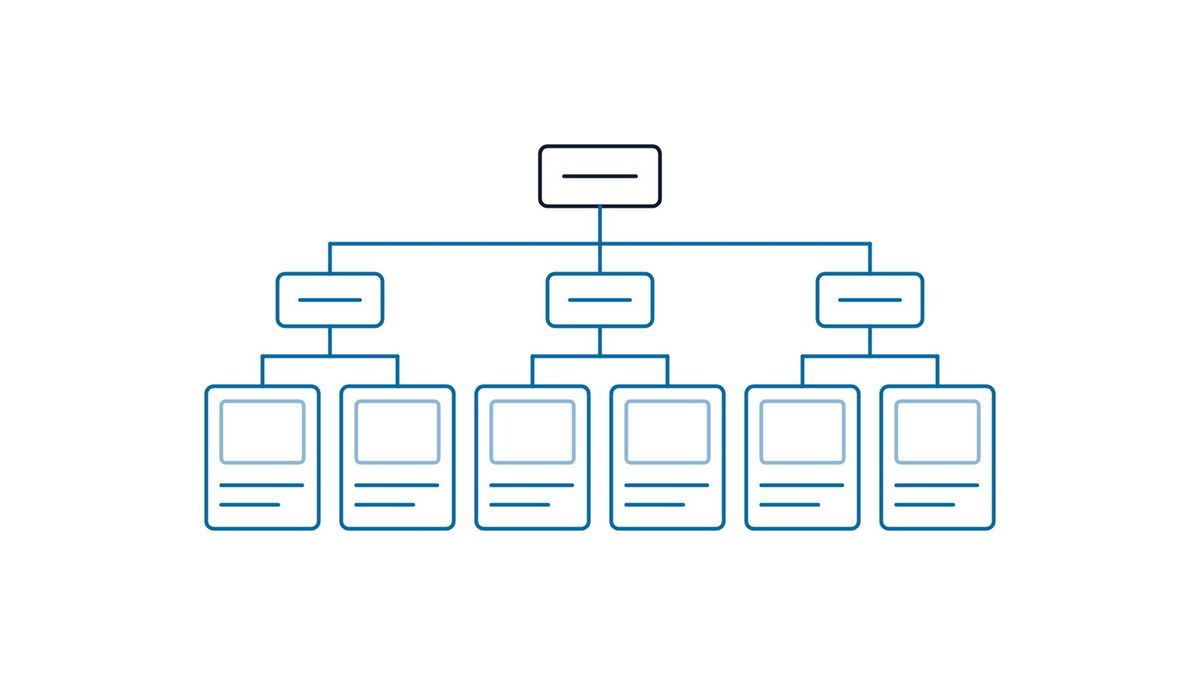
Product Catalog Website Structure for Manufacturers (2026)
Structure a manufacturer catalog site around how buyers search: product type as the backbone, applications as entry points, specs as filters. Group size-only variants into series pages, publish specs as HTML text rather than images or PDFs, keep filter URLs out of the crawl, and never fake prices in Product markup.