Alibaba Store vs Your Own Website: Do You Need Both?
A marketplace store is rented space and a website is an asset you own. It is not either-or, and not every manufacturer needs a website right now.
Not always. A marketplace store gets you found inside the platform; an owned website lets buyers and AI verify you outside it. Wait if you are not building a brand; build one for branding or North American distribution.
Contents ▾
"We already have an Alibaba.com store and the inquiries are steady. Do we really need to pay for a website as well?" It is one of the questions we hear most often from export manufacturers and trading companies. Usually the person asking has already heard two opposite answers. One camp says marketplace traffic is the only traffic that matters and a website is a brochure nobody reads. The other says a marketplace store is rented land and every serious company needs its own site. Both camps have a point, and both are telling half the story.
A disclosure first. HappyCXO Studio sells both Alibaba.com store management and website builds. Whichever way you decide, we have work to offer, so we have no reason to push you toward one side or to talk down the other. What we want to do here is lay out how the two actually differ, and be honest about something most agencies will not say: in some situations, you genuinely do not need a website yet.
This guide answers three questions with three comparison tables: what separates a marketplace store from an owned website, how North American buyers and AI search engines learn about you outside the marketplace, and which combination fits your company at its current stage. Every marketplace rule we cite links to the original text in the Alibaba.com Rules Center so you can check it yourself. Rules change, so treat the version you read on the day as authoritative.
The short answer: a marketplace and a website solve different problems
A marketplace store gets you found inside the platform. A website gets you verified, remembered and recognized by AI outside it. They divide the work rather than compete, and if the platform already sends steady inquiries and you are not building a brand, a website can wait.
The marketplace's biggest asset is ready-made buyer traffic plus transaction infrastructure. Alibaba.com's US seller page advertises access to more than 40 million B2B buyers, while one of its regional seller pages claims more than 50 million active buyers, over 500,000 inquiries a day and buyers in more than 200 countries and regions. The two figures do not even match each other, and neither can be independently audited, so treat them as marketing claims. Discount them heavily and they still describe an audience no small manufacturer can reach through its own website in the short term.
The platform also provides trust machinery you cannot replicate on your own site. Under the Trade Assurance refund policy, buyers can request a refund within 30 days of delivery, or 60 days for Enterprise buyers. The Verified Supplier program has third-party inspection firms such as SGS, Intertek and TÜV Rheinland assess suppliers on site. For a buyer placing a first order with a stranger overseas, these mechanisms reduce the risk of paying first, which is the hardest hurdle a new supplier faces.
A website creates value in a completely different direction. You control the URLs, the content, the structured data and the crawler rules. Quote requests land in your own inbox or CRM. Most importantly, your company name, brand and product data get an official version on the open web, something buyers, search engines and AI systems can check other claims against. The marketplace gets you seen; the website gets you confirmed.
One myth to clear up early: many owners frame this as "which channel has the better ROI?" That is the wrong comparison, because the two handle different parts of the buyer journey. A better question is: is my business short on being found, or short on being believed? If store impressions and clicks are low, you have a discovery problem, and fixing the store is usually the fastest win. If buyers click, ask for a quote and then go quiet, the problem often sits outside the platform: the buyer went looking for you and did not find enough to feel safe.
Rented storefront vs owned asset: how the two really differ
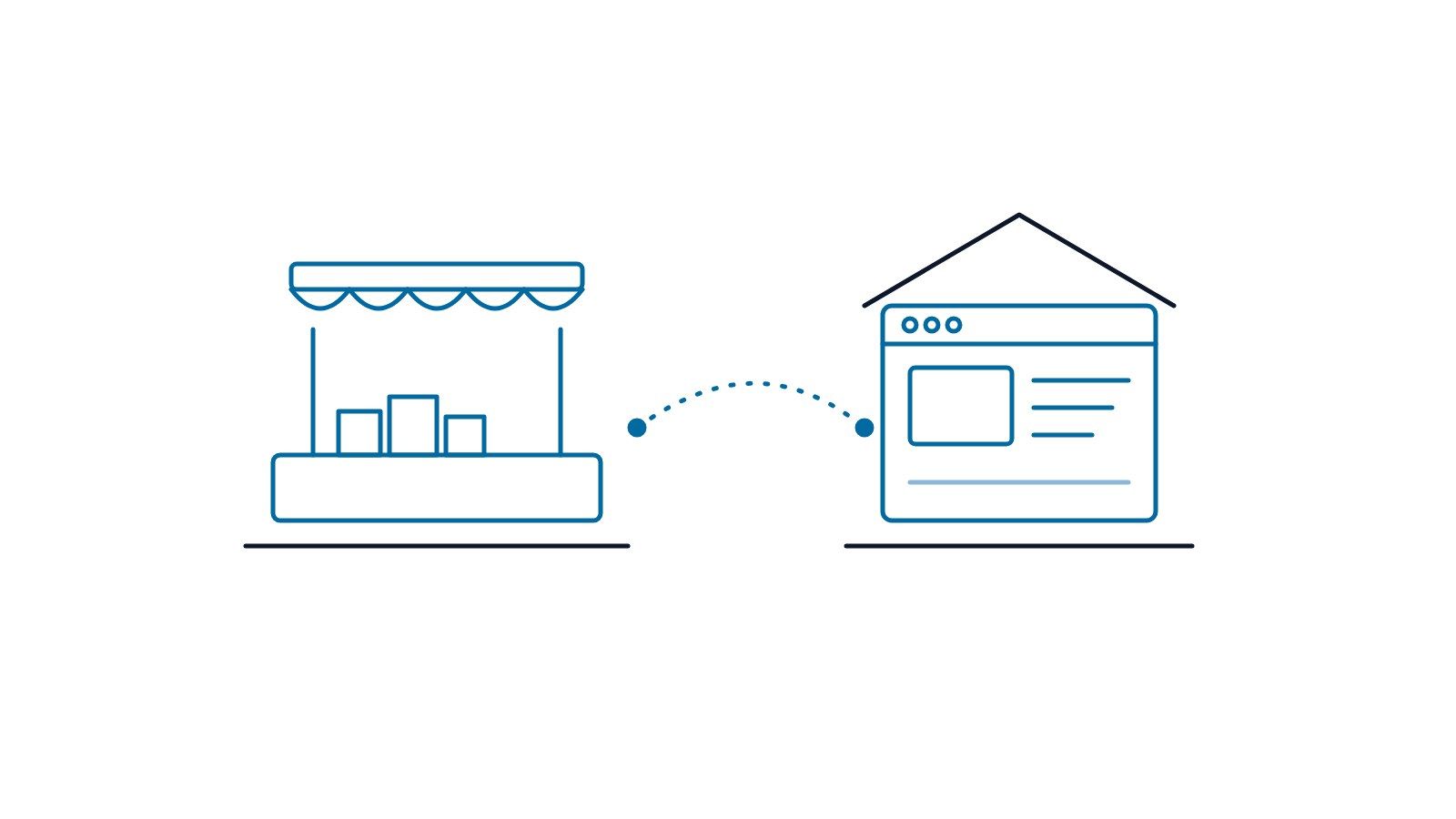
A marketplace store is like a unit in a busy mall: the foot traffic belongs to the mall, the mall writes the rules and your competitor is next door. A website is a building you own: you have to attract visitors yourself, but the address, content, data and rules are yours.
| Criterion | Marketplace store (rented) | Own website (owned) |
|---|---|---|
| Where traffic comes from | Platform search, recommendations and paid placement | Google, Bing, AI search, direct visits, outbound email and social |
| Who sets the rules | The platform, which can amend rules and keeps final interpretation | You, within the law and search engine guidelines |
| Where buyer data lives | Inquiries and chats sit in the platform messaging system | Forms go straight to your inbox or CRM |
| Who else is on the page | Similar suppliers side by side, one click from a price comparison | Only you, telling your full story |
| Brand expression | Limited customization inside platform templates | Full control over layout, tone and depth |
| Search equity | Accrues to the platform domain | Accrues to your own domain |
| AI search readability | Set by the platform robots.txt and page technology | You set crawler rules, structured data and llms.txt |
| Transaction protection | Trade Assurance and Verified Supplier built in | You build trust evidence yourself |
| Speed to results | Fast, listings enter platform search right away | Slow, organic search compounds over time |
| Cost model | Membership, ads and staff time; stop paying and visibility stops | Build plus maintenance; content and domain authority accumulate |
| Account risk | Penalty points can hide your products and store | No third-party suspension, but you manage hosting and domain |
The traffic and the rulebook belong to the platform
How visible you are on a marketplace depends on its search algorithm and rules, and the platform writes those rules unilaterally. Alibaba.com's Enforcement Actions for Publishing Invalid Product Information, effective August 25, 2023, states that the platform may amend the rules because of changes in the business environment and reserves final interpretation. The same document says products not edited in 180 days and/or showing no visitors, inquiries or favorites are treated as inactive and removed. None of this is malicious; every marketplace needs order. It does mean that your exposure, reviews and listings all sit on an account you do not fully control.
Account risk is real as well. Alibaba.com's help article for Global Gold Suppliers explains that once an account reaches 12 or more penalty points, its search results and storefront are blocked for the penalty period. Most diligent sellers never get there, but the mechanism exists, and that is what rented space means.
Buyer data stays inside the platform
Alibaba.com's buyer help center directs buyers to contact suppliers through inquiries or the chat button, and Article 19 of the platform's General Provisions says Alibaba.com encourages members to trade through its online trading system. That protects buyers. For sellers, it means inquiries, conversations and order history mainly live inside the platform and are governed by its rules. A quote form on your own website sends data straight to you, where it becomes part of a customer list you own and can nurture for years.
Your competitors share the page
On a marketplace results page, your listing sits next to similar suppliers, and a buyer can compare price, minimum order and ratings in seconds. That suits suppliers who compete on price. It is harder for factories that win on engineering, customization or service, because a listing template leaves little room for the full argument. On your own site, you are the only company on the page, and a buyer can read about your process, quality control, case studies and technical documents before deciding to reach out. Marketplaces are built for comparison; websites are built for persuasion.
What North American buyers do after they find you on a marketplace
In our experience, serious North American buyers who shortlist a supplier on a marketplace often search the company name, look for a website and check the email domain before going further. That is an observation from our work, not a measured statistic, but several verifiable facts explain why it makes sense.
Let us be clear about the evidence. This pattern comes from what we see across our marketplace-management and website projects. We have not found a transparent, published survey that measures how often marketplace buyers search a supplier by name afterward, so we will not give you a percentage. Here is the indirect evidence.
First, North American buyers already weight verified company information heavily. In a survey published in 2021, Thomas, the US industrial sourcing platform, polled more than 400 verified buyers on its network and reported the top four factors in choosing a new supplier: lead time, price, quality certifications and verified company information. The same article urges suppliers to keep company details, including their website, consistent across every online channel.
Second, buyers prefer to research on their own. Gartner research finds that 75% of B2B buyers prefer a rep-free sales experience. A buyer who does not ask a salesperson will look things up, and the only things they can find are the ones you have made public.
Third, and most practically, payment fraud makes verification a matter of basic risk control. The FBI's 2025 Internet Crime Report counted 24,768 business email compromise complaints in 2025, with reported losses of about $3.05 billion, and defines the scam as targeting businesses that work with suppliers and regularly pay by wire transfer. An importer about to wire a deposit to a new overseas supplier has every reason to confirm who is on the other end, and a website and company-domain email that match the marketplace profile are the most direct proof.
Fourth, even the platform acknowledges that trust needs evidence beyond itself. Alibaba.com offers Verified Supplier inspections, yet the same page states that Alibaba does not inspect or guarantee the authenticity of sellers' products or certificates. The platform provides one layer of assurance, not all of it, so buyers doing their own homework is entirely rational.
What buyers actually check
From what we observe, buyers most often check these points outside the platform:
- Does a search for the company's English name return the same company?
- Is there a website, and do its products, certifications and factory details match the store?
- Does the sales contact use a company-domain email or a free mailbox?
- Do the factory address, photos and founding year line up across sources?
- Do certifications carry numbers that can be looked up?
The point is not whether each item exists, but whether everything agrees. Alibaba.com's Rules for Filling in Company Information already require the English company name to match registration documents, and company details such as headcount, founding year and capacity to reflect reality. If your website shows a different name, year or capacity, a buyer will not work out who is right; they will simply mark you as a risk. Our guide to North American buyer trust signals breaks this checklist down further.
Without a website, you cannot even measure it
There is a second-order effect most companies miss: without a website, you have no way of knowing how many buyers are looking you up. Once a site is live and verified in Google Search Console, the Performance report shows the queries people searched before seeing your pages. Filter for queries containing your company or brand name, track the trend and compare it with marketplace inquiry volume over the same months. It is not precise attribution, but it turns "do buyers check us?" from a guess into data you can watch.
Can ChatGPT and Perplexity cite your Alibaba.com storefront?
Possibly, but only to a limited degree, and not on your terms. Whether AI can read a storefront depends on the marketplace robots.txt and page technology, and several of the pages that best describe your company are blocked. On your own website, you decide who gets in.
An AI search engine can only cite a page its crawler can read. OpenAI's crawler documentation says OAI-SearchBot surfaces websites in ChatGPT search, and sites that opt out will not be shown in ChatGPT search answers; GPTBot, by contrast, collects training data. Perplexity's documentation says PerplexityBot surfaces and links websites in Perplexity search results and is not used to train foundation models.
So how does Alibaba.com treat these crawlers? On September 28, 2026, we checked the Alibaba.com robots.txt. It disallows GPTBot and Google-Extended across the entire main site. According to Google's crawler documentation, Google-Extended governs whether content may be used to train Gemini models and to ground answers in Gemini apps; it does not affect inclusion or ranking in Google Search. In other words, the main site explicitly withholds its content from those uses.
To be fair, the main site does not specifically block OAI-SearchBot or PerplexityBot, and product detail paths are open, so your product pages can still be reached by ChatGPT or Perplexity search. Supplier storefronts, however, live on their own subdomains. The storefront robots.txt, identical on the three stores we compared, tells every crawler to stay out of the product list page, the contact page, the credit page and the pages under the company profile directory. Those are precisely the pages that answer who a company is and whether it can be trusted. When we fetched a storefront home page with an ordinary command-line tool, we received the platform's anti-bot challenge rather than the store content. That test does not tell you what AI crawlers see, but it illustrates the point: the platform decides what gets read.
Even if the platform opened everything, you still could not do the things AI systems rely on most. You cannot add your own Organization structured data to declare your legal name, address and related profiles. You cannot publish an llms.txt file, because the llms.txt proposal places it at the root of a website, and the root of alibaba.com is not yours. To an AI system, your store is always a page on Alibaba.com, not an independent company entity.
On your own website, you control all of it
Control is the difference. In your robots.txt you can explicitly allow search crawlers such as OAI-SearchBot and PerplexityBot. You can serve complete HTML from the server, which matters because Vercel's December 2024 analysis found that major AI crawlers from OpenAI, Anthropic and Perplexity do not execute JavaScript, so a client-rendered page can look empty to them. And following Google's Organization structured data guidance, you can mark up your name, logo, address and contact details on the home or about page, then use the sameAs property to point to your marketplace store and LinkedIn page, telling search engines and AI that these profiles belong to one company.
FAQ markup has changed roles too. Google stopped showing FAQ rich results entirely on May 7, 2026, so FAQPage markup no longer wins extra space in Google results. Its value now is helping AI systems and other search engines parse your questions and answers. For step-by-step setup, see our AEO technical setup guide, and if your site is solid but AI still ignores you, read why AI does not recommend your brand.
Two separate AI worlds
One more distinction that often gets blurred: the marketplace has AI of its own. In a March 2026 press release, Alibaba International said its AI sourcing tool Accio, launched in November 2024, now serves more than 10 million monthly active users. Writing clear, accurate listings is therefore preparation for the platform's own AI, while your website is what open-web AI such as ChatGPT, Perplexity and Gemini reads. Different audiences, and neither job substitutes for the other.
When you do not need a website yet
If platform inquiries are steady, your buyers are mostly price-driven wholesale accounts, nobody in-house can feed a website with content and you are not building a brand, putting resources into the marketplace first usually pays off better. The website can wait, but register the domain and set up company email now.
We sell both services, and these are the situations where we most often tell clients to hold off.
Steady inquiries from price-driven wholesale buyers
If you sell standardized products that compete on price and lead time, and buyers compare on the platform, order there and pay through Trade Assurance, their motivation to verify you elsewhere is lower. Money spent on titles, main images, detail pages and response time usually works harder than money spent on a website. Thomas says today's buyers expect an answer in under 24 hours and quotes a purchasing decision-maker who drops any supplier they have to chase twice. Getting those basics right beats launching a site nobody maintains.
Nobody can keep the site fed
A website is never finished. New products, renewed certificates, fresh case studies and technical articles all need someone to supply material. If no one can provide an update at least once a quarter, the site is likely to go stale within a year, and a site listing discontinued products and departed contacts costs you credibility when a buyer checks. In that case, one accurate company page beats a large site that decays.
Products and markets are still being tested
When you are new to export and unsure which product line will sell, a marketplace is an excellent test bed. Listing is fast, changes are fast and inquiry content tells you what buyers actually care about. Once you know which products and countries show steady demand, plan the site structure around that evidence rather than moving every product onto a website on day one.
You already have a usable old site
If you already have a website that has not been touched in years, the question may not be whether to build but whether to fix or rebuild. Start with our website technical self-check, then use the redesign vs rebuild framework. Often, filling in the English content and fixing the basics is enough.
Three things to do now, even if you wait
- Register your company domain under a company-owned account. Good names get taken, and a domain held by a former employee or vendor is a painful problem later.
- Move to company-domain email. Google's email sender guidelines, in force since February 2024, require every sender to set up SPF or DKIM for its sending domain, and senders of more than 5,000 messages a day to personal Gmail accounts must also set up DMARC. You can only configure these on a domain you own; see our cold email deliverability guide.
- Standardize your English company name, brand name and model numbering. The marketplace already requires your English name to match registration. Use the same naming on business cards, catalogs, quotes and any future website, so buyers can find you and everything matches.
Decision table: the right mix for your stage
Just starting: focus on the marketplace. Steady platform inquiries: add a lean website as a verification point. Building a brand: run both, with the website as home base. Targeting North American distribution: a website is required. Over-reliant on one platform: a website is your second channel.
| Company stage | Typical situation | Recommended mix | How far the website should go |
|---|---|---|---|
| Just starting | New store or unsteady inquiries, product line still shifting | Concentrate on the marketplace, defer the website | Register domain and company email, one company page at most |
| Steady marketplace inquiries | Consistent inquiries, want higher close rates and order values | Marketplace first, plus a lean English website for verification | About, product categories, certifications, factory photos, quote page |
| Building your own brand | Want buyers to remember the brand, not just the price | Run both, website as the home of brand and content | Full catalog, application stories, technical articles, FAQ |
| Targeting North American distribution | Pursuing distributors, private-label brands or large accounts | Website required, marketplace as a supplementary lead source | Full English catalog, spec sheet downloads, certification files, structured data |
| Over-reliant on one platform | Most orders come from one marketplace, rule changes are a worry | Keep the marketplace, build a second acquisition channel | At minimum, a site that search engines and AI can read |
Just starting: get the store right and claim your spot
At this stage, the scarcest resources are people and attention. Getting listings, inquiry responses and quoting running smoothly matters more than running two channels. The website has one job: when a buyer looks you up, they should find the correct company name, address and contact details. A single company page is enough. If you want to understand what a full build eventually involves, our export website build guide walks through it.
Steady marketplace inquiries: a website that helps inquiries close
Many manufacturers that have run a marketplace store for a few years are here, and it is where a website's return is easiest to see. You do not need the site to drive large amounts of new traffic. You need buyers who come from the platform to find a professional, consistent and complete company. The key pages are the company overview, product categories, quality certifications, factory and equipment photos, and a well-designed quote form; see our RFQ form design guide. Before you build, record monthly marketplace inquiries and close rate as a baseline so you have something to compare against after launch.
Building your own brand: the website becomes home base
When you want buyers to remember your brand, engineering capability or application expertise rather than your price, the website moves from verification point to content home. Marketplace templates suit specs and pricing; they do not suit a technical article on material selection or a full customer story. At this stage you need a clear catalog structure, covered in planning a manufacturer catalog website, and product pages AI can understand, covered in our product page AEO guide.
Targeting North American distribution: the website is the entry ticket
Distributors, brand owners and large buyers evaluating a new supplier need a source they can forward to colleagues, download spec sheets from and check certifications against. The Thomas survey puts quality certifications and verified company information among the top four supplier-selection factors, and your own website is where you can present those in full. If you sell into more than one language market, plan the structure early; see multilingual export website architecture.
Over-reliant on one platform: the website is your second leg
If most orders come from one marketplace, any rule change, category shift or account penalty can hit revenue directly. A website cannot replace the platform, but it can build organic and branded search outside it, so you still have a channel if something goes wrong. You do not have to start with custom development: according to W3Techs data from September 2026, WordPress still runs 40.7% of all websites. Our website platform comparison covers the trade-offs.
How to connect the two without breaking marketplace rules
Do not put your website address, QR codes or contact details in product titles, detail pages, store pages or images; Alibaba.com rules restrict it. Instead, keep your company name, brand and model numbers identical on both, let buyers find your site by searching, and link from your website back to your store.
Start with the rule text. Article 17 of the Alibaba.com General Provisions bars members from publishing information about external websites or apps that may create transaction risk, harm the platform or hinder its operation, explicitly including the names, hyperlinks and QR codes of external websites published during communication, on product detail pages, on store pages, in live streams and in short videos. The Invalid Product Information enforcement rules list a product title that contains contact information as a violation: each offending product is removed and one point is deducted, and above a threshold the platform can adjust search rankings for all of the seller's products, block them entirely or suspend the account.
This is not theoretical. In our marketplace audit for Manufacturer H, one group of listings carried contact details in the product description, which the platform treats as a violation. We removed them rather than gamble. Sellers usually add an email or URL with good intentions, to make themselves easier to reach, but under the platform's rules that trades the safety of the whole account for a small convenience.
The table below summarizes common tactics. The risk ratings are our reading of the rule text; the platform keeps final interpretation, so check the latest rules before acting.
| Tactic | Our risk rating | Why |
|---|---|---|
| Email or phone number in a product title | Clear violation | Rules list contact information in titles as a violation, one point per product plus removal |
| Website URL or QR code on detail pages, store pages or images | High risk | General Provisions restrict external site names, links and QR codes on those pages |
| Dropping your website link into inquiry chats | Check current rules | The restriction explicitly covers communication, and the platform decides what counts |
| Same English company name, brand and model numbers on both | Low risk, recommended | Your English company name must match registration anyway |
| Link from your website to your marketplace store | Low risk, recommended | Platform rules govern platform content; your site is yours |
| Organization markup on your site with sameAs pointing to the store | Low risk, recommended | Tells search engines and AI both profiles are one entity |
| One product master dataset feeding both channels | Low risk, recommended | Specs, certifications and lead times stay consistent when buyers cross-check |
Connection means consistency, not diversion
Most people hear "connect the channels" and think of links that pull buyers off the platform. The approach that works, and stays within the rules, runs the other way: when a buyer searches for you outside the platform, every place they land says the same thing. Your English company name, brand, model numbering, product photos, certificate numbers and factory details should match across the store, the website, catalogs and LinkedIn. A buyer notes your company name on the platform, searches it and finds your site; an AI system reading the same facts across sources can recognize them as one company.
Linking from your site back to the store helps
Linking your website to your marketplace store is sometimes seen as sending customers back to the platform. For a first-time buyer, though, confirming who you are on your website and then placing a small first order through Trade Assurance can be the most comfortable path. The two channels vouch for each other: the platform supplies transaction protection, the website supplies proof of identity.
Feed both channels from one product master
Product data is where contradictions creep in. Often one colleague runs the store and another person or an outside vendor runs the website, and within two years specs, model numbers and certifications no longer match. The sturdier approach is one product master, such as a structured spec sheet, from which both channels are generated. Company G had a PDF catalog of seventy-odd pages full of items that had never been listed; we turned it into product drafts and bulk-uploaded them, and structured data of that kind can feed a future website just as easily.
Two client examples: marketplace only, and both together
Company G had no website and ran no ads, yet organic impressions rose once its store keywords and listings were fixed. Company H rebuilt a four-language website and audited its store at the same time. Each channel has its own homework, and neither replaces the other.
Company G: no website, no ads, just a store done right
Company G trades stage lighting and effects equipment. When we took over, the store drew six to seven hundred impressions a day but had gone a long stretch with zero inquiries, all without any ad spend. The project stayed entirely inside the store. We rebuilt keywords in batches and verified each batch; rewrote detail pages for listings that were seen but never engaged with, spelling out specs, materials, applications, certifications and lead times; turned the PDF catalog into searchable listings, taking the store from a little over three hundred products to just over five hundred; and fixed a wrong ship-from setting and messy attribute data. Organic impressions rose from 690 to 752 a day (+8.9%) and click-through rate from 1.67% to 2.21%, with zero ad spend.
The lesson: when the problem is discovery, there is often plenty of unfinished work on the platform, and a website is not necessarily the fix.
Company H: website rebuild and marketplace audit together
Company H makes auto-care chemicals under its own brand and for OEM/ODM clients. Its old site had no canonical tags and no Open Graph, and the English sitemap returned a 404. We first captured all 360 legacy URLs, then rebuilt the site in four languages, English, Traditional Chinese, Spanish and Arabic with right-to-left layout, producing 472 product pages from 118 products across four languages. Around three hundred redirects were verified one by one, and the client now maintains the site from its own CMS.
The same client's Alibaba.com store got a full-catalog audit. Keyword fields across more than two thousand listings were almost all stuffed. One model family had been split into more than three hundred listings, fewer than twenty of which drew traffic, and the whole family had produced a single inquiry. We set a rule of no more than ten live listings per model family and rewrote keywords on an add-only basis, so terms already earning traffic were left alone.
The takeaway: website problems and store problems often share one root cause, product data that was never properly organized. The case page documents the work done and makes no claim about inquiry growth, and we will not infer one here.
Three common myths
A good website does not mean you can close the store. A website does not need to be big to be useful. And copying marketplace listings onto your site wastes what a website can do.
Myth 1: once we have a website, we can close the store
A website cannot supply marketplace traffic or transaction protection. For many buyers, the platform remains the first stop for finding new suppliers and the most comfortable way to pay for a first order. Unless your marketplace inquiries have fallen too low to justify the upkeep, keep the store running after the website launches.
Myth 2: a website has to be big to matter
For a verification-first website, complete beats large. An accurate company overview, product categories, certifications, factory photos and a quote page already answer most of the questions a checking buyer has. Page count can grow as content accumulates.
Myth 3: just copy the marketplace listings over
Marketplace listings are written for marketplace search, with the weight on titles and keyword fields. Website product pages should answer the questions buyers and AI ask: material differences, applications, certification scope and customization terms. Company H's store keywords were classic stuffing; copying them onto a website would only duplicate the problem. For what to do once the site is live, see the first 90 days after launching an export website.
Bottom line: are you short on being found, or on being believed?
So, if you already sell on Alibaba.com, do you need a website? It depends on your stage. If your problem is impressions and clicks, fix the store first. If buyers find you but go quiet after checking you out, or you are ready to build a brand and pursue North American distribution, a website is infrastructure the marketplace cannot provide. The healthiest relationship between the two is not competition but consistency: the marketplace gets you found, and the website gets you believed.
If you have decided you need a website and want to see how planning, multilingual structure and AI readability fit together, take a look at our website development service. If you are still weighing it, run your own inquiry numbers and staffing through the decision table above; the answer is usually clear.
FAQ
We already sell on Alibaba.com. Do we still need our own website?
Can I put my website URL or a QR code on my Alibaba.com product pages?
Do North American buyers really search my company name on Google?
Will ChatGPT or Perplexity cite my Alibaba.com storefront?
With a limited budget, should we invest in the marketplace or the website first?
Can my website link to my Alibaba.com store?
Will a website reduce the inquiries we get on Alibaba.com?
What is the minimum a website needs to be useful?
References
- 1.Alibaba.com International Platform's General Provisions— Alibaba.com Rules Center
- 2.Enforcement Actions for Publishing Invalid Product Information— Alibaba.com Rules Center
- 3.Rules for Filling in Company Information— Alibaba.com Rules Center
- 4.(GGS) Why is my product rejected— Alibaba.com Help Center
- 5.How can I find the supplier's contact information?— Alibaba.com Help Center
- 6.Alibaba.com robots.txt— Alibaba.com
- 7.Alibaba.com supplier storefront robots.txt— Alibaba.com
- 8.Alibaba.com 台灣賣家招商頁— Alibaba.com
- 9.Alibaba.com US Seller Pricing & Plans— Alibaba.com
- 10.Trade Assurance money-back policy— Alibaba.com
- 11.Introducing Verified Suppliers— Alibaba.com
- 12.Alibaba International Launches Accio Work, an Enterprise AI Agent for Global Businesses— Alibaba International via PR Newswire
- 13.Overview of OpenAI Crawlers— OpenAI
- 14.Perplexity Crawlers— Perplexity
- 15.Google's common crawlers (Google-Extended)— Google Search Central
- 16.Organization structured data— Google Search Central
- 17.The /llms.txt file proposal— llmstxt.org
- 18.The rise of the AI crawler— Vercel
- 19.Google Drops FAQ Rich Results From Search— Search Engine Journal
- 20.What Industrial Buyers Care About Most When Shortlisting New Suppliers— Thomas
- 21.The B2B Buying Journey— Gartner
- 22.2025 IC3 Annual Report— FBI Internet Crime Complaint Center
- 23.Email sender guidelines— Google Workspace Admin Help
- 24.Performance report (Search results)— Google Search Console Help
- 25.Usage statistics of content management systems— W3Techs
We help small and medium businesses grow export sales in the AI era.
Related articles
B2B Inquiry Form Design: Turn Website Traffic Into RFQs
A B2B inquiry form should ask only what you need to reply (company, country, quantity, application, timeline), show a response time and real contact details beside it, route every submission to a monitored inbox, and track success with GA4 generate_lead as a key event.
What to Do After Your Website Launches: A 90-Day Plan
The first 90 days after launch run in three stages: in week 1, set up Search Console, Bing Webmaster Tools and GA4; in weeks 2 to 4, fix what the indexing, 404 and speed reports show; in months 2 and 3, build a content cadence. Google says results take weeks to months, and no one can guarantee rankings.
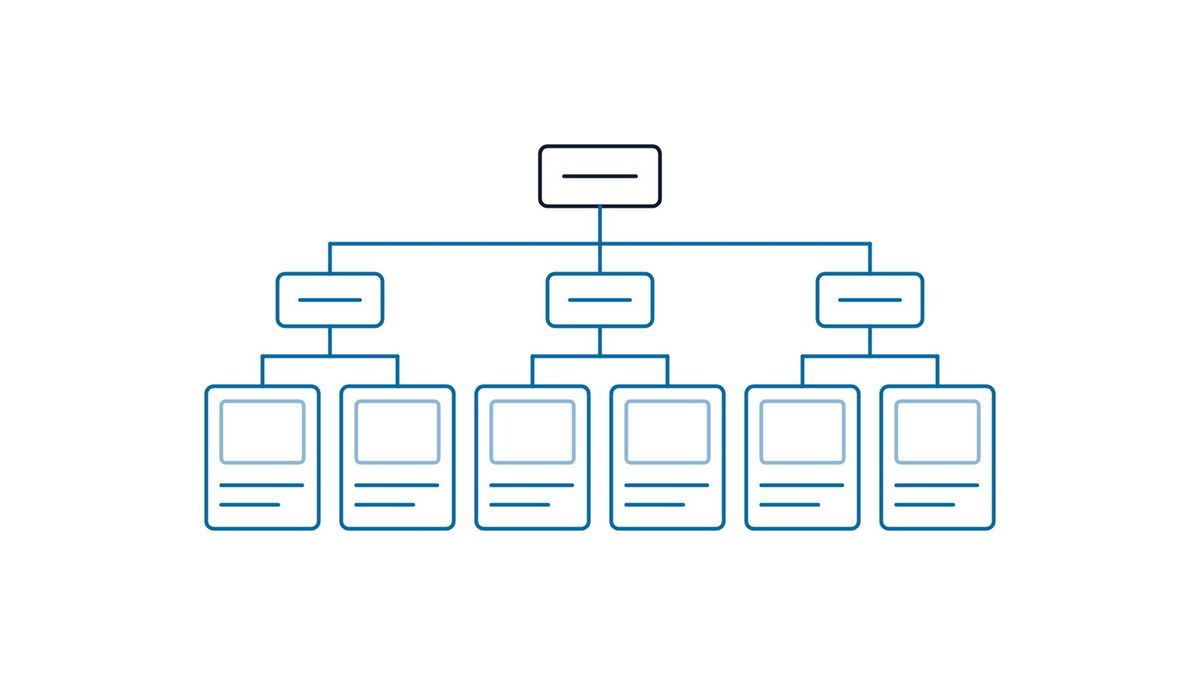
Product Catalog Website Structure for Manufacturers (2026)
Structure a manufacturer catalog site around how buyers search: product type as the backbone, applications as entry points, specs as filters. Group size-only variants into series pages, publish specs as HTML text rather than images or PDFs, keep filter URLs out of the crawl, and never fake prices in Product markup.