Turn Engineering Know-How Into E-E-A-T Authority Content With AI
An E-E-A-T playbook for technical manufacturers — recognised by Google and AI alike
The know-how in engineers\’ heads is the strongest trust signal yet stays buried. Learn the human-extract / AI-redraft / human-review loop that turns it into authority content.

Contents ▾
Taiwanese manufacturing's most underrated asset is the stuff in engineers' heads they "don't think is a big deal": why this application needs this material, why this tolerance is this number, where the yield-critical point of this process is, what selection mistake customers make most. To an engineer this is daily routine; to an overseas buyer it is the strongest signal for judging "does this supplier actually know their stuff." The problem: engineers don't write marketing, marketers can't write technical depth, so this gold mine stays buried. This article is not about another vague "company profile" but about using AI to systematically convert engineering know-how into E-E-A-T authority content that both Google and AI search recognise.
Why technical content beats marketing talk
The conclusion first: in B2B manufacturing procurement, buyers trust "a technical judgement that solves their problem" far more than "we are top quality, fastest delivery" — a line anyone can say. The reason is simple: marketing talk is zero-cost and universal, so its information value to a buyer is zero; a precise technical judgement can only be made by someone who has actually done it and hit the pitfalls, so it is itself proof of capability. When your content can accurately say "if this application uses material A, here is the low-temperature risk, so we recommend B," the buyer needs no self-praise — he concludes "these people know" on his own.
Google's long-standing guidance on helpful, reliable content repeatedly stresses E-E-A-T — Experience, Expertise, Authoritativeness, Trustworthiness — as the core of whether content is trusted and recommended long-term. For manufacturing those four words are simply another way of saying "your engineers have actually done it and actually understand." Technical content is inherently easier to demonstrate E-E-A-T with, because it cannot be faked by copying and empty phrases.
Marketing talk is "I say I'm good"; technical content is "I demonstrate I understand and let you judge." In B2B the latter closes several times harder.
Break a deep-rooted Taiwanese-manufacturing myth here: "we make products, we're not marketers, writing this is useless." The error is imagining "marketing" as "boasting." Technical content is not marketing in essence; it is "writing down what you already explain to customers verbally, putting it online, so buyers can read it while you sleep." The selection logic your senior salesperson explains on the phone every day, the technical answers your engineer types into emails — those conversations are themselves the highest-quality content; they just happen once and vanish, never sedimented, searched or reused. Technical content marketing turns these "one-off evaporating expert conversations" into "produce once, work forever digital assets." Grasp this and the owner stops seeing it as "off-task" and sees it as "compounding what we already do."
More crucial is the timing shift. As buyers increasingly use AI search to "research before contacting suppliers," AI cites and recommends content with high information density, concrete technical judgement and verifiability — not adjective-laden self-promotion. In other words, technical content not only persuades the human buyer but decides whether the AI "speaks for you" when the buyer asks. A useful test: if your content still holds true with any competitor's name swapped in, its value to buyers and AI is zero; only content that "breaks when the name changes, because it contains your exclusive judgement and experience" is a real asset. For this search-logic shift see the GEO survival guide.
What E-E-A-T actually means for manufacturing
E-E-A-T sounds like SEO jargon but translates very concretely into manufacturing language. Experience: you have actually done this product, this industry, this application — concrete to "we solved a process problem for a certain class of customer," not "we are experienced." Expertise: content carries the view of people who genuinely understand (engineers, technicians, QA), not a marketer's second-hand paraphrase.
Authoritativeness: you are seen in this niche as "a source worth referencing" — others cite you, AI treats your statements as basis. This usually comes from "consistently producing depth others cannot." Trustworthiness: content has concrete data, cites verifiable sources, and dares to state limits and conditions ("this advice applies only under X; under Y use Z instead") rather than only good news. Stating limits is itself a high-trust signal.
Of these four, the one Taiwanese manufacturing most underrates and should most lead with is the first E: Experience. Why — Expertise competitors can catch up to by reading and copying specs; but Experience ("we have actually handled thousands of these orders, hit these pitfalls, know when things go wrong") is stacked by time and scale, impossible to rush or copy. A twenty-year Taiwanese factory's biggest content weapon is not "we are professional" but "we have seen so many failure cases that we know exactly what you should worry about in this application." Turning twenty years of accumulated-but-never-written experience into content monetises, for the first time, the factory's least copyable asset.
The implication for Taiwanese SMEs: what you lack is never the substance of E-E-A-T (your engineers really are strong) but its presentation — you never turned that substance into content Google, AI and buyers can read. McKinsey's research on B2B digital marketing likewise finds B2B buyers' trust in "demonstrated expertise depth" content runs higher long-term than brand-ad messaging — because the former lowers their decision risk and the latter does not. Put differently, the money you spent making the website pretty likely has far lower ROI than the same money spent turning the engineer's judgement into ten deep articles — because buyers want not visual design but evidence of "do they actually know."
Step one: extract the engineer's words
The bottleneck of the whole method is not AI but "engineers not thinking what they know is worth writing." So step one is not opening AI but designing a low-burden knowledge-extraction process where the engineer only has to talk, not write. The most effective form is the structured interview: someone who knows how to ask poses five to eight questions on a specific topic, recording throughout. Questions cannot be "introduce our technology" but must be ones that force out real judgement: "what do customers most often select wrong, and why?" "if the customer insists on a cheaper substitute for this spec, what are the consequences?" "how do you tell at a glance whether an inquiring customer actually understands?"
One good 30-minute interview usually extracts enough material for three to five deep technical articles. The key is "ask the right questions" and "record the original words" — the engineer's blurted "you must watch out for OO here, or 90% of the time you get XX" is the most valuable core, the bit buyers buy and competitors cannot copy. Throw that line away and rewrite it in marketing language and you have melted gold into iron.
In practice, build an "engineer interview question bank" organised by product line, schedule a few 30-minute interviews each quarter, and treat it like production scheduling — routine, not extra burden. iThome's coverage of manufacturing knowledge management notes one of the biggest hidden risks for Taiwanese SMEs is that critical know-how lives only in senior staff's heads, never recorded, and evaporates when they leave. A side effect of this interview process solves exactly that succession problem — content marketing and knowledge succession are two sides of the same thing.
Step two: use AI to re-draft, not to generate
The most critical idea here: AI's role is "re-drafting," not "generating." Let AI generate a technical article from zero and you get correct-but-vague, judgement-free, competitor-identical "correct nonsense" that Google and buyers both recognise as AI filler. The correct use is the reverse: feed the engineer interview transcript to AI and ask it to do four things — organise structure, add background so a layperson follows, preserve every original engineer judgement and number, and flag where the engineer should re-confirm.
In other words, the exclusive technical judgement comes from a human; AI only turns it from "spoken, jumpy, jargon-laden" into "clearly structured, layperson-readable, SEO-friendly." This division gives content two contradictory traits at once: depth only an insider could state (from the engineer) and accessibility a layperson can read (from AI rewriting). This is exactly what SMEs could not do before — the ones who understood couldn't write plainly, the ones who wrote plainly didn't understand.
There must be an "engineer quick-review" gate after output: AI may subtly distort a technical detail for fluency, or turn "usually" into "always." The engineer need not rewrite, just spend ten minutes catching such distortions. This "human extract → AI re-draft → human review" loop is the backbone of the method; drop any link and the content is either shallow or untrustworthy. To wire this content workflow into your website and multilingual publishing, see our owned website and SEO service and the AI multilingual SEO playbook.
Which content types to produce
Not all technical content is equally effective. For B2B manufacturing the four highest-ROI types are these. Type 1: selection guides. "Under X application, how to choose Y spec — and the three mistakes most people make." This hits the buyer's most anxious pre-purchase decision point, has strong search intent, and naturally demonstrates your expertise. Type 2: process/method white papers. Deeply explain why a key process affects final quality and how you control it. This filters out "cheapest only" buyers and attracts quality buyers who genuinely care and will pay fairly.
Type 3: failure analysis and lessons. "The most common failures we have seen customers hit in this application, and the root cause." This is the strongest vehicle for the Experience in E-E-A-T — only someone who has handled many cases can state it, highly credible, almost impossible for competitors to fabricate. Type 4: compliance and standards interpretation. Translate FDA / CE / RoHS / national regulations into "what this concretely means for your procurement decision." This serves SEO (buyers search these keywords) and trust (showing you really know the target market's rules) at once.
These four share another strategic value: they auto-filter customers. A buyer who only wants the cheapest supplier will not spend time reading your process white paper; those who read it through and proactively write to discuss technical detail are almost all quality buyers who value quality, want a long relationship, and have more price room. Deep technical content does not just "attract traffic," it "filters traffic" — it spares you from personally handling a flood of low-quality inquiries, because the content has already deterred the wrong people and attracted and pre-educated the right ones. For headcount-limited SMEs this "filtering" benefit is often worth more than the "exposure" benefit.
What the four share: all start from "the buyer's decision anxiety," not "what we want to say." A practical topic rule: list the questions sales and engineers are most often asked by customers; each common question is the seed of a high-intent piece — they are asked often precisely because the market lacks good answers, and you happen to have them. This is far more precise than inventing topics and echoes the "search-intent-first" principle in the manufacturer website SEO checklist. In practice, just compiling "the 20 questions sales is asked most" and answering each seriously usually fills an SME's entire first-year content calendar — every piece precisely matched to real search demand, no guessing.
Structured data and GEO: make machines understand your expertise
Human-readable is not enough; in the AI-search era your technical content must be machine-readable too, or AI cannot cite you when answering buyer questions. Two layers. First, basic structure: clear heading hierarchy, Q&A-style sections, explicit data presentation, selection advice as extractable tables or lists rather than buried in prose. AI extracts and cites clearly structured content far more easily than prose.
Second, schema and semantic markup: structured data (FAQ, technical specs, article author and expertise markup) tells search engines "what this content is, who wrote it, what its credibility basis is." For E-E-A-T, explicitly marking "the author is a Y-domain engineer with X years' experience" directly strengthens the machine-readable Authoritativeness signal. Business Next's observation of generative search notes that once the traffic gateway shifts from "blue links" to "AI gives the answer directly," content not read and cited by AI effectively does not exist — and structure is the key to being understood by AI.
Call out specifically why "stated author expertise" matters unusually much for manufacturing yet is unusually often ignored. For generic marketing, who wrote it does not matter; but the credibility of a technical judgement depends heavily on "who said it." The same sentence "this application embrittles at low temperature," said by an anonymous content editor versus by a named "R&D lead with fifteen years in polymer materials," carries vastly different weight to buyers and AI. So every technical article should carry a real bylined author with background and experience, even linking to their LinkedIn. This is not only a schema-level Authoritativeness signal but direct trust-building for the human buyer — it upgrades "a company's claim" into "a verifiable real expert's judgement," an order of magnitude more persuasive. Most Taiwanese SME content (if any) is anonymous, which is exactly the low-hanging fruit by which you can easily overtake peers.
A pragmatic recommendation for SMEs: do not chase perfect technical SEO from day one, but the minimum three — "clear structure + basic schema + stated author expertise" — must be done, because their ROI is highest and they are exactly what most peers ignore. Do these three and your technical content builds authority simultaneously with human buyers, Google and AI; for the extended GEO play see the GEO survival guide.
Measurement and long-term compounding
The payoff curve of technical authority content is completely different from advertising: ads are linear spend ("pay and it shows, stop and it stops"), technical content is asset accumulation ("slow early, compounding later"). Understand this difference and you will not wrongly quit in month three when "it hasn't exploded yet." Measure in three layers. Short-term (1–3 months) behavioural metrics: organic impressions, dwell time, whether long-tail technical keywords start arriving. The point here is not traffic volume but "are the right people (those asking technical questions) starting to come in."
Mid-term (3–9 months) conversion metrics: the quality of inquiries technical content brings — usually more professional, closer to closing, with more room on price, because the buyer came after reading your technical judgement, not from price-shopping. Many factories find technical-content inquiries, while not necessarily numerous, close at a markedly higher rate and price than generic ones — that is the method's real value.
Long-term (9+ months) asset metrics: branded search volume, citations by other sites or AI, share of inquiries from organic search. Once built, these are a moat money cannot buy short-term — because the essence is "you really understand, and you sedimented that understanding into a searchable asset," which no budget can rush. Harvard Business Review's analysis of content as an asset likewise notes accumulable knowledge content has far higher long-term returns than one-off paid exposure, because the former is an asset and the latter an expense. Turning engineering know-how into that kind of asset is the most underrated yet most worthwhile thing Taiwanese manufacturing can do in the AI era; with the content foundation laid, subsequent outreach is far more efficient — see our portfolio and the website SEO topic hub.
FAQ
Engineers are busy and dislike writing — how does this land?
Isn\’t letting AI generate articles directly faster?
Which technical content closes best?
Why bother with structured data and schema?
How long until technical content pays off?
References
- 1.Creating helpful, reliable, people-first content— Google
- 2.Growth, Marketing & Sales — Our Insights— McKinsey & Company
- 3.Harvard Business Review— Harvard Business Review
- 4.製造業知識管理報導— iThome
- 5.生成式搜尋觀察— 數位時代 Business Next
- 6.中華民國對外貿易發展協會 TAITRA— TAITRA
We help small and medium businesses grow export sales in the AI era.
Related articles
Website Health Check: 9 Technical Problems SMEs Miss
Nine technical problems turn up again and again on small-business websites: no GA4, a misspelled ads parameter, the wrong language declaration, multiple H1s, missing alt text, no structured data, long articles with one subheading, unmeasured speed, and shaky HTTPS or mobile basics. You can check all nine yourself with a browser, and most need no rebuild.
How Much Does a Website Cost in 2026? A Quote Decoder for SMEs
A small business website typically costs 2,000 to 15,000 dollars in 2026, with mid-size builds at 15,000 to 60,000. The spread comes down to hours bought, liability carried, and aftercare promised, plus 15 to 25 percent of build cost in annual operating fees. This guide gives you the price table, an eight-item quote checklist with the consequence of leaving each one vague, the common pricing traps, and two three-year total cost of ownership models.
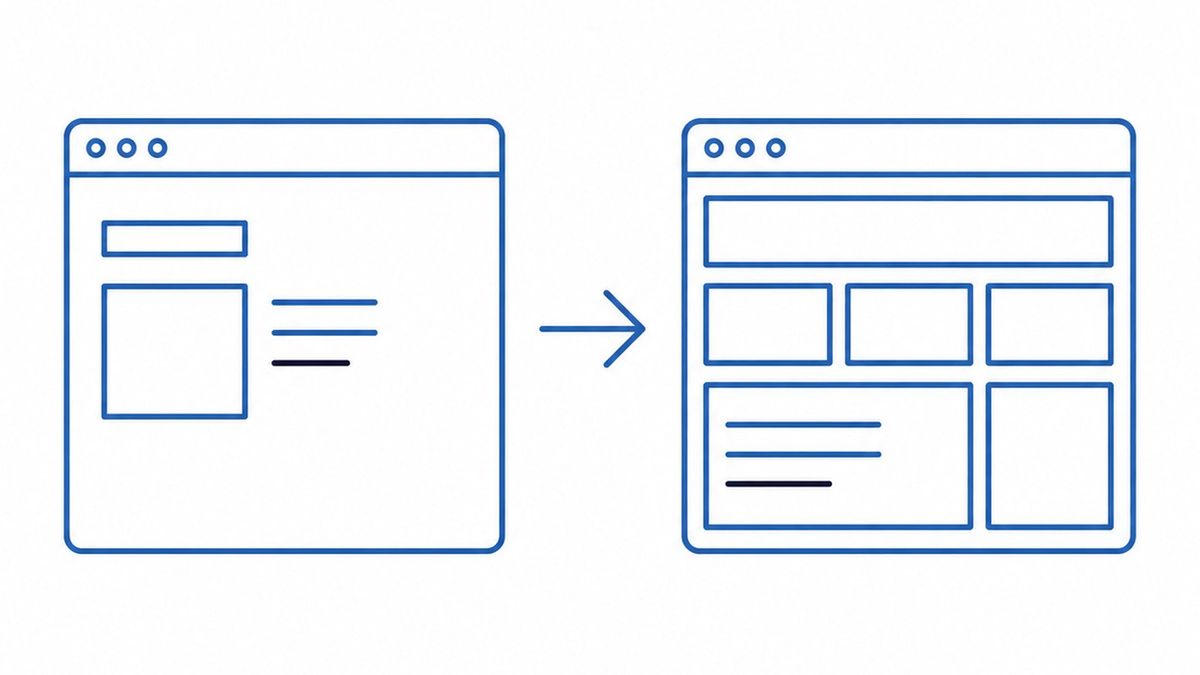
Website Redesign or Rebuild? A Decision Framework for 2026
Whether to rebuild an old website is not an aesthetic judgement but a structural one: an unsupported runtime, no responsive design, or lost admin control mean rebuild, while dated visuals or stale copy usually mean a redesign is cheaper and safer. This guide gives six paired signals, the five mechanisms behind post-launch traffic collapse and how to prevent each, a seven-question decision flow, and the three things to finish before any code is written.